Optimus Prime toy
The CallerThe Optimus Prime toy is both a companion to Theo Bosch on his solitary trip to Snellevann and one of the objects that makes his death painfully concrete to those who find him. First carried as part of a boy’s lunch-and-hiking kit, it is recovered near Theo’s remains; later, in Hannes Bosch’s hands, it becomes a material link to his son that he cannot use as Theo did.
Theo’s companion on the trip
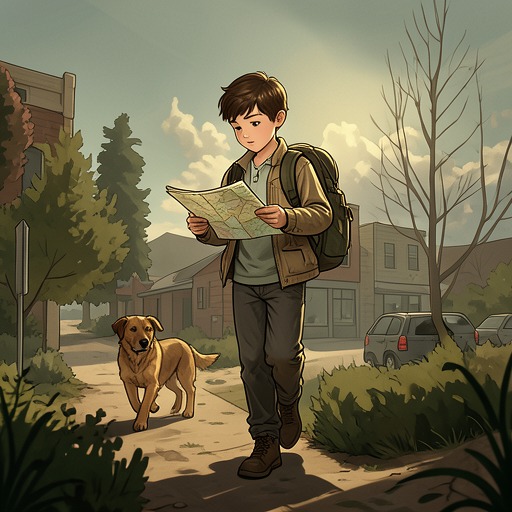
At the water’s edge, Theo arranges his things with care: his trainers and socks, his lunch of three slices of bread, a Thermos of blackcurrant squash, and, finally, Optimus Prime. The toy belongs among the practical objects of his outing, but it also accompanies the imaginative confidence with which he approaches the wilderness. Sitting alone, carrying a willow branch and using a hunting knife to whittle it, he thinks of himself as tough. The robot is part of the small world he has brought with him, set beside food and drink while he rests by the water.
The toy’s name and nature matter to the adults who later encounter it. When Jacob Skarre lifts it from the ground and identifies it as Optimus Prime, Konrad Sejer does not understand. Skarre explains that it is a Transformer, a toy that changes shape into something else. That simple explanation supplies a point of recognition: the object is not an anonymous piece of debris but a child’s particular possession, one associated with play and transformation.
Found among the remains
At the discovery site, the toy has fallen from Theo’s open rucksack. Sejer sees it amid the horrific signs of the attack: the child’s scattered remains, a small rucksack bearing a Kvikklunsj chocolate bar patch, a Thermos, crumpled sandwich paper, a mobile phone, and a white trainer. The toy’s presence does not soften the scene; instead, its ordinary familiarity sharpens the contrast between the boy’s preparations for a walk and the violence that has interrupted it. A possession that had been packed for a day outdoors is now part of the evidence of his death.
Skarre picks the toy up and gives it to Sejer, who cannot make sense of what he is seeing. The robot is at once a recognizable plaything and an object out of place among the remains. Its capacity to change shape also establishes a contrast with the irreversible change in Theo’s condition: the toy can become something else, while the boy cannot return to the life in which he carried it. The contrast is grounded in the scene rather than in an explanation offered by the investigators, who are still trying to understand what happened.
The call that goes unanswered
The objects in the rucksack help connect the isolated scene to Theo’s family. Skarre finds the mobile phone and sees that it has one missed call. When he says that someone tried to call the boy, the phone becomes evidence of an attempted connection that did not reach him. The toy sits within the same cluster of personal belongings, but its significance is different: the phone points to contact, while Optimus Prime identifies the child through something he chose to carry and use.
At the roadside, Hannes still hopes that the dead boy might not be Theo. He takes his own phone from his pocket and calls, looking at Skarre, who is holding Theo’s phone. Theo’s phone immediately begins to play “Joy to the World.” The toy is not what confirms the boy’s identity in that moment; the melody from the phone does. But the recovered possessions together carry the devastating recognition from the discovery site to the parents. Optimus Prime has already been found with the boy, and the phone’s response closes the last opening through which Hannes could hope that the remains belong to someone else.
Hannes’s attempt to transform it
After Theo’s death, Hannes sits with Optimus Prime on his lap while Konrad Sejer and Jacob Skarre visit him. He tries to change the robot into a truck, following the simple movements Theo had managed, but cannot make it work. The action is concrete and repeated: he twists and turns the toy’s arms, yet it will not obey him as it had Theo. What had been an easy part of the boy’s play has become a task his father cannot complete.
Hannes’s handling of the toy takes place amid his guilt and grief. He thinks that Theo’s death is his fault and remembers that he had encouraged his son to go hiking alone. As he sits with the robot, he imagines Theo returning through the hallway, having come back because Wilma needs him and because small boys should remain on Earth as long as possible. The toy does not produce that imagined return, and the clicking he hears is not shown to come from it. Instead, its presence on his lap holds him beside the absent child: he can touch the object and try to repeat Theo’s movements, but neither the toy’s transformation nor his efforts can restore the boy.
From plaything to keepsake
The toy’s role changes with the people who handle it. For Theo, it is one element of a self-contained excursion, carried alongside lunch and a drink. For Skarre and Sejer, it is a clue to the identity and ordinary life of the child whose remains they have found. For Hannes, it becomes a focus of bereavement: he tries to perform the transformation associated with Theo’s skill, but the toy remains resistant in his hands.
That progression gives Optimus Prime its narrative force without making it more than the evidence supports. It is a real object passed from a child’s packed belongings into an investigation and then into the grief of his father. Its ability to change form carries a stark, limited contrast with the finality surrounding Theo, while Hannes’s failed attempt reveals the gap between possessing a child’s things and being able to recover the child himself.